
Strategic Audience Analysis: Starbucks
Starbucks has created more than just a coffee brand it has built a lifestyle that connects strongly with its audience online. A review of the Starbucks official website and its social media platforms, including Instagram, X, and Facebook, shows a consistent focus on visually driven and experience based content. Based on social media analytics and engagement trends, Starbucks primarily targets individuals between the ages of 22 and 32, with an income range of approximately $35,000 to $80,000. This audience is largely composed of young professionals and college educated consumers who value convenience, personalization, and brand identity. The demographic slightly skews female and is concentrated in urban and suburban areas, with strong interests in coffee culture, sustainability, and social experiences.
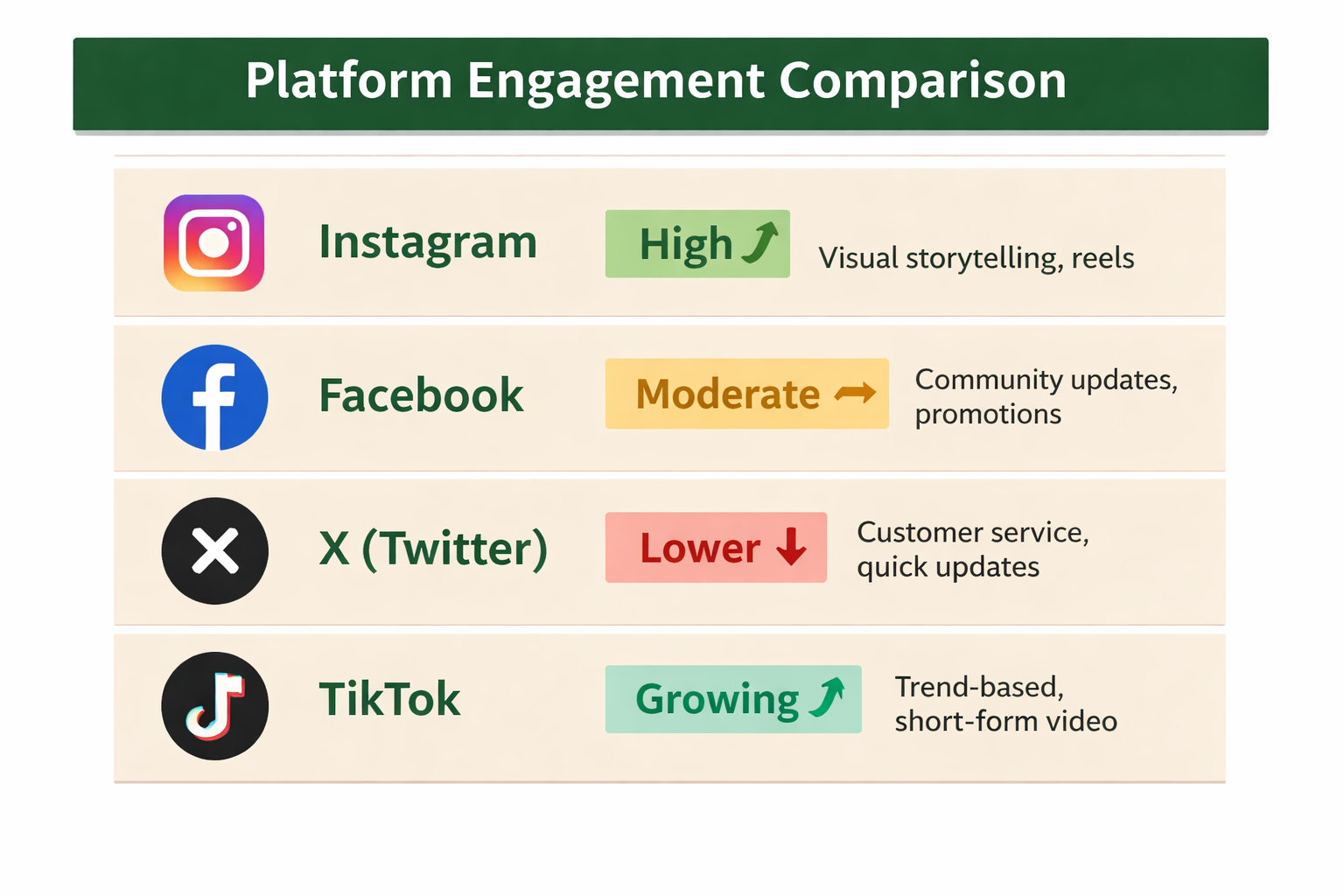
Engagement data indicates that Instagram is Starbucks’ strongest platform, significantly outperforming X and Facebook in terms of likes, shares, and overall interaction. Content featuring seasonal drinks, high quality visuals, and user generated posts consistently receives the highest engagement. In comparison, competitor Dunkin’ focuses more on humor and trend driven content, while Starbucks maintains a more polished, storytelling based approach. This difference highlights Starbucks’ positioning as a premium lifestyle brand rather than a convenience focused competitor. Additionally, TikTok is emerging as a growing platform for Starbucks, particularly for reaching younger audiences through short form, trend based content.
Sentiment analysis across social platforms shows that Starbucks maintains a largely positive public perception. Customers frequently highlight drink quality, customization options, and the overall brand experience. However, recurring concerns related to pricing and wait times appear in comment sections. Analytics further show that posts centered around limited time offers, holiday campaigns, and personalized drink experiences generate the highest engagement, reinforcing the idea that Starbucks’ audience values both exclusivity and personalization over standard promotional messaging.
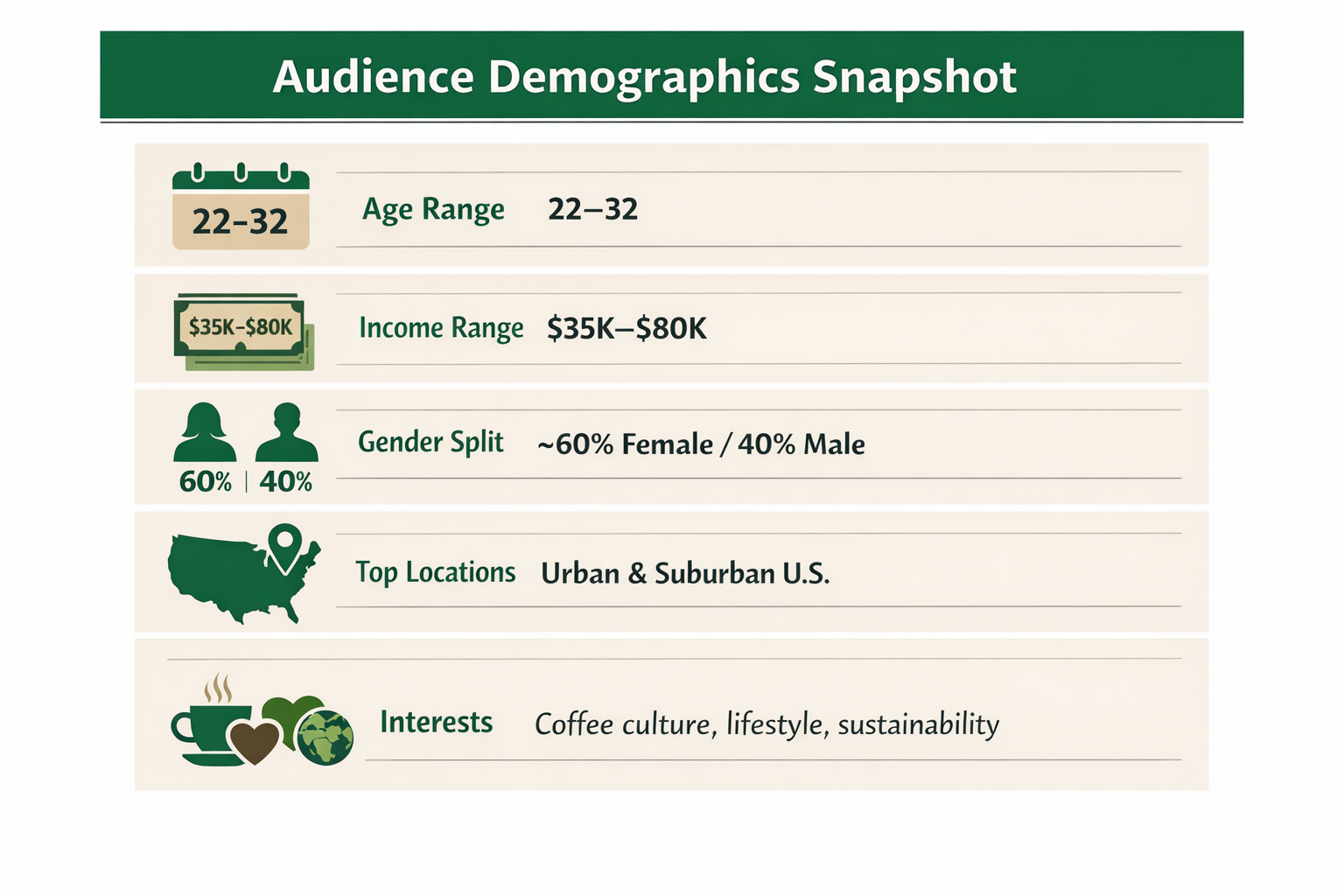
Starbucks’ audience can be clearly represented through a buyer persona known as the “Everyday Professional.” This individual is typically around 27 years old, earns approximately $55,000 annually, and incorporates Starbucks into their daily routine not only for coffee but for the experience and identity it represents. Based on this analysis, Starbucks should continue prioritizing Instagram and TikTok by expanding short form video content and encouraging more user generated engagement. Addressing pricing concerns through loyalty programs or value based messaging could also improve sentiment. While maintaining its premium image, Starbucks could benefit from selectively incorporating trend based content similar to Dunkin’ to remain culturally relevant without weakening its brand identity.
Sources
ChatGPT. (2026). AI-assisted analysis and infographic generation for social media audience insights . OpenAI.
Hootsuite. (2025). Social media trends report. https://www.hootsuite.com/resources/social-trends
HubSpot. (2025). Marketing statistics. https://www.hubspot.com/marketing-statistics
Pew Research Center. (2024). Social media fact sheet. https://www.pewresearch.org/internet/fact-sheet/social-media/
Sprout Social. (2024). Social media data report. https://sproutsocial.com/insights/data/
Starbucks. (2025). Official website. https://www.starbucks.com
Starbucks. (2025). Facebook page. https://www.facebook.com/starbucks
Starbucks. (2025). Instagram profile. https://www.instagram.com/starbucks
Starbucks. (2025). X (Twitter) profile. https://x.com/starbucks
Statista. (2025). Starbucks statistics and facts. https://www.statista.com/topics/1242/starbucks/
